
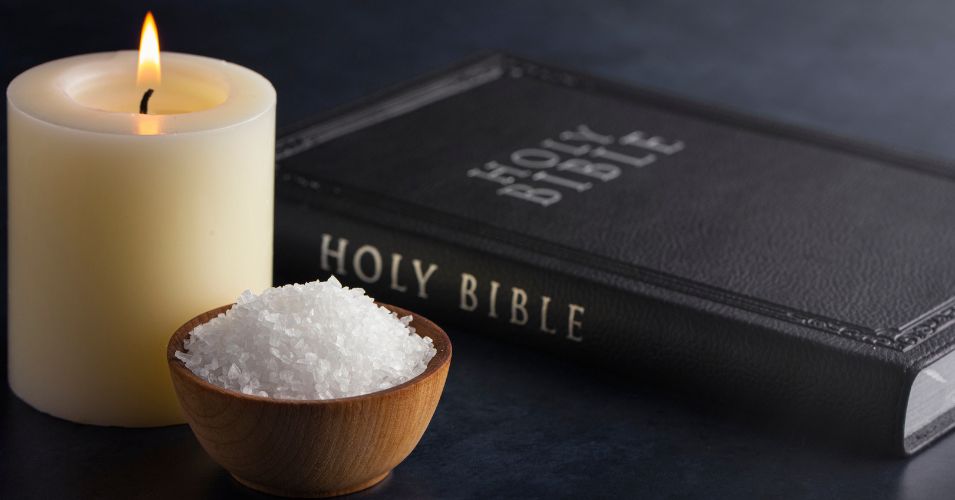
Many people have heard that salt can protect a home, keep evil away, or provide spiritual protection. These beliefs have been passed down through religious traditions and cultural customs for generations.
But what does the Bible say about salt for protection? Does Scripture support these ideas, or is salt simply a powerful biblical symbol?
By looking at the relevant Bible verses in their proper context, we can separate common myths from what God’s Word actually teaches about salt, faith, and where true spiritual protection comes from.
What Does the Bible Say About Salt for Protection?
If you’ve heard that sprinkling salt around your home keeps evil away, you may wonder if the Bible actually supports that idea. The short answer is no. While salt appears throughout Scripture, the Bible never says it has supernatural power to protect people from evil spirits, curses, or spiritual attacks.
This is where many people get confused. Biblical references to salt are often mixed with traditions that developed outside of Christianity. Over time, those customs led some people to believe salt itself has protective power. However, when you look at the Bible in context, that idea simply is not there.
Instead, Scripture repeatedly points to God as the source of protection. Psalm 91 describes Him as a refuge and fortress, while Ephesians 6 tells believers to put on the armor of God rather than rely on physical objects. The focus is always on faith in God, not on items that are believed to carry spiritual power.
That does not mean salt is insignificant. In fact, it is one of the Bible’s richest symbols. It represents things like covenant, purity, preservation, and faithful living. Understanding those meanings helps answer what the Bible says about salt for protection. The answer is that salt has symbolic value, but protection belongs to God alone.
Does the Bible Teach That Salt Has Protective Power?
Although many people believe salt can ward off evil, there is no Bible verse that tells Christians to use it that way. Neither the Old Testament nor the New Testament describes salt as a spiritual weapon or a source of divine protection.
One passage that often causes confusion is 2 Kings 2:19 to 22. In this account, the prophet Elisha throws salt into a polluted spring, and the water becomes clean. At first glance, it may seem like the salt performed the miracle. The passage, however, makes it clear that God healed the water. The salt was simply part of the sign, not the source of the power.
Jesus also used salt as a picture when He called His followers “the salt of the earth” in Matthew 5:13. He was describing the influence believers should have on the world through their character and faith. Likewise, Paul encouraged Christians to let their conversations be “seasoned with salt,” meaning their words should be wise and gracious.
When every passage is considered together, the message stays consistent. The Bible uses salt as a meaningful symbol, not as an object with supernatural abilities. For Christians seeking spiritual protection, Scripture always directs attention back to God’s power rather than to salt or any other physical item.
The Biblical Meaning of Salt in the Old and New Testaments
To understand what the Bible says about salt for protection, it helps to look at what salt actually represents throughout Scripture. Rather than giving it mystical power, the Bible uses salt as a symbol with several important spiritual meanings.
In the Old Testament, salt often pointed to faithfulness and permanence. For example, Numbers 18:19 and 2 Chronicles 13:5 mention a “covenant of salt.” In the ancient world, salt preserved food from spoiling, making it a fitting picture of a covenant that was meant to endure.
Salt also had a place in Israel’s worship. Leviticus 2:13 instructed the Israelites to season every grain offering with salt. This practice reminded God’s people that their relationship with Him was built on commitment and obedience, not empty rituals.
When you reach the New Testament, the symbolism becomes even more personal. Jesus called His followers “the salt of the earth” in Matthew 5:13. He was not saying believers possessed supernatural abilities. Instead, He challenged them to influence the world by living lives marked by truth, integrity, and compassion.
Across both Testaments, the message stays remarkably consistent. Salt symbolizes preservation, purity, covenant, wisdom, and faithful living. Those themes explain why salt appears so often in the Bible, but they also show why it should not be viewed as a charm or a spiritual safeguard. The Bible gives salt symbolic significance, while reserving divine power for God alone.
Bible Verses About Salt and Their True Context
Several passages are often quoted in discussions about salt for protection, but none of them teach that salt can protect people from evil. Reading each verse in its full context paints a very different picture.
Matthew 5:13 is one of the best-known examples. When Jesus said, “You are the salt of the earth,” He was encouraging His followers to make a positive impact on the world. The comparison is about influence, not spiritual defense.
Colossians 4:6 uses the same imagery. Paul tells believers that their speech should be “seasoned with salt.” In other words, their words should be gracious, thoughtful, and wise. Again, salt serves as a metaphor rather than a source of power.
The account of Elisha healing a polluted spring in 2 Kings 2:19 to 22 is another passage people frequently misunderstand. While salt was part of the miracle, the text makes it clear that God healed the water. The miracle came from God’s authority, not from the salt itself.
Other verses, including Leviticus 2:13 and Mark 9:50, connect salt with covenant, purity, and peace. Together, these passages reveal a consistent pattern. Whenever the Bible mentions salt, it points readers toward a spiritual truth instead of assigning supernatural power to a physical object. That distinction is essential for anyone asking what the Bible says about salt for protection.
Should Christians Use Salt for Protection or Trust God Alone?
If you’re looking for a biblical answer, the evidence points in one direction. Christians are never told to use salt as protection against evil, bad luck, or spiritual attacks. That practice comes from cultural traditions and folklore, not from Scripture itself.
The Bible encourages believers to place their confidence somewhere else. Instead of relying on physical objects, it repeatedly points to God’s presence, His promises, and the power of prayer. Whether facing fear, temptation, or spiritual opposition, the response is always the same: trust God.
That doesn’t mean salt has no place in the Bible. As we’ve seen, it carries rich symbolism. It represents covenant, purity, wisdom, preservation, and the influence Christians should have on the world. Those meanings are important, but they should not be confused with supernatural protection.
If someone chooses to keep salt in their home for cooking or as part of a family tradition, there is nothing inherently wrong with that. The concern begins when salt is believed to have spiritual power that the Bible never gives it.
For anyone wondering what the Bible says about salt for protection, the message is refreshingly simple. Salt is a symbol that points to deeper spiritual truths, but God alone is the believer’s protector. Trusting Him aligns with the consistent teaching found from Genesis to Revelation.
Final Thoughts
So, what does the Bible say about salt for protection? It says far less than many people expect. While salt appears throughout Scripture, it is never described as an object that drives away evil or provides supernatural protection.
Instead, the Bible uses salt to illustrate faithfulness, purity, wisdom, and the lasting nature of God’s covenant. Those themes give salt an important place in biblical teaching, but they never suggest that Christians should depend on it for spiritual safety.
If your goal is to follow Scripture rather than tradition, the conclusion is clear. Appreciate the biblical symbolism of salt, but place your trust in God alone. The Bible consistently presents Him as the true source of protection, strength, and peace, making Him the only refuge believers need.